Showing posts with label shrine. Show all posts

Tuesday, October 11, 2011

Asuke Matsuri

This weekend was incredibly busy!
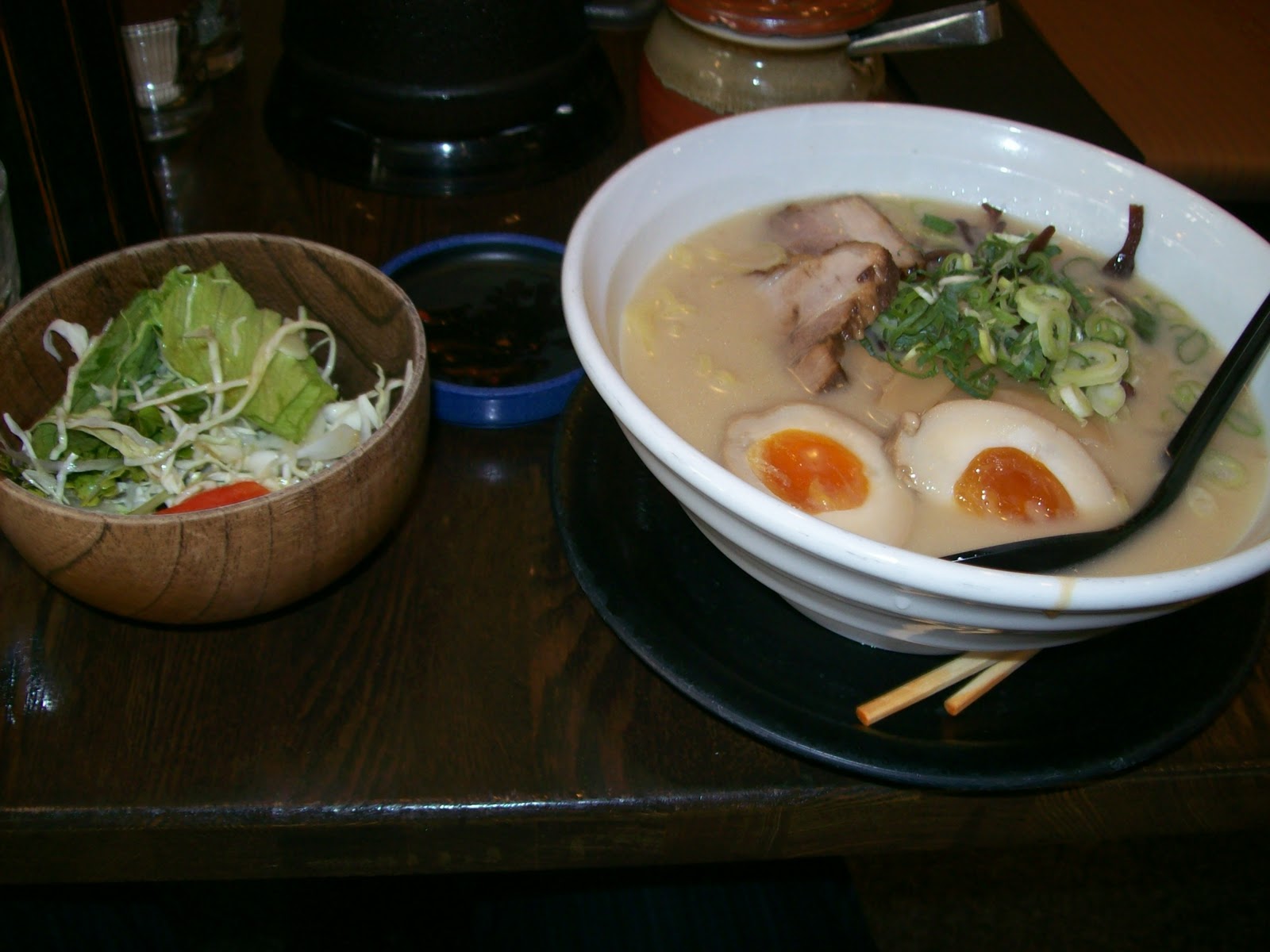
First, on Saturday we went to go see Wicked!  But before that Alisha and I had some delicious ramen. 
Then we got to the theater where they were showing Wicked!  I quickly bought some souvenirs, including the Japanese soundtrack.

It was a really interesting experience to see it in Japanese.  I understand a lot more than I thought I would, mostly because I'd seen it before in English.  But it was a little disappointing.  There was definitely one point where the actress playing Elphaba didn't hit her note that I noticed, and I usually can't notice these things at all.  Unfortunately that means everyone else who does notice these things was complaining about it, which just makes the whole thing feel negative to me, especially since I spent so much money on the CD before I actually sat down and saw it.  Oh well, it's still a cool souvenir and it's interesting to compare the translations (right?! I'm trying not to get buyer's remorse here).  I would assume that for the recording they'd make sure that everything sounded all right, but I have absolutely no ear for these things so I can't tell.
Anyway it was a bit of a bummer because I'd been really excited about it.
But it was still fun to see the show again, and I still love the costumes and everything.  Glinda still stole the show for me, even in Japanese.

After that we went to Moss Burger, a Japanese fast food chain.  It was only like 4 in the afternoon and I was going to have dinner at 7, so I didn't get a full burger, but I did get a small strawberry milkshake and OniPote.  (oh-knee-poh-tay from onion-potato) It's the perfect solution for indecisive people who can't decide whether they want fries or onion rings! It gives you a little bit of each for the same price as getting either fries or onion rings! THIS IS SO BRILLIANT AND YET WE DON'T HAVE IT IN AMERICA.  What's up with this?!

Then I went home, did homework, and crashed.  That was Saturday.

Sunday was another matsuri trip!  This one was to the Asuke Matsuri!  It's in Asuke, a town a little more than an hour from Nagoya (driving, when the traffic's good).  Apparently it's known for its fall leaves, and it's a popular date spot for that reason.  But apparently once the leaves change it just gets PACKED with sightseers.  I can imagine why.  There's a lovely river running through town and the mountains are gorgeous and just covered in trees.  I saw some postcards in a souvenir shop with pictures and it's incredible.

Anyway this was another men's festival, this time for Hachiman, a Shinto god of war.
 This festival was a required class trip for research methods, as opposed to the other two which had been optional.  So the entire class was there, and we did some more preparation beforehand.

Here’s the basics of what’s going on.

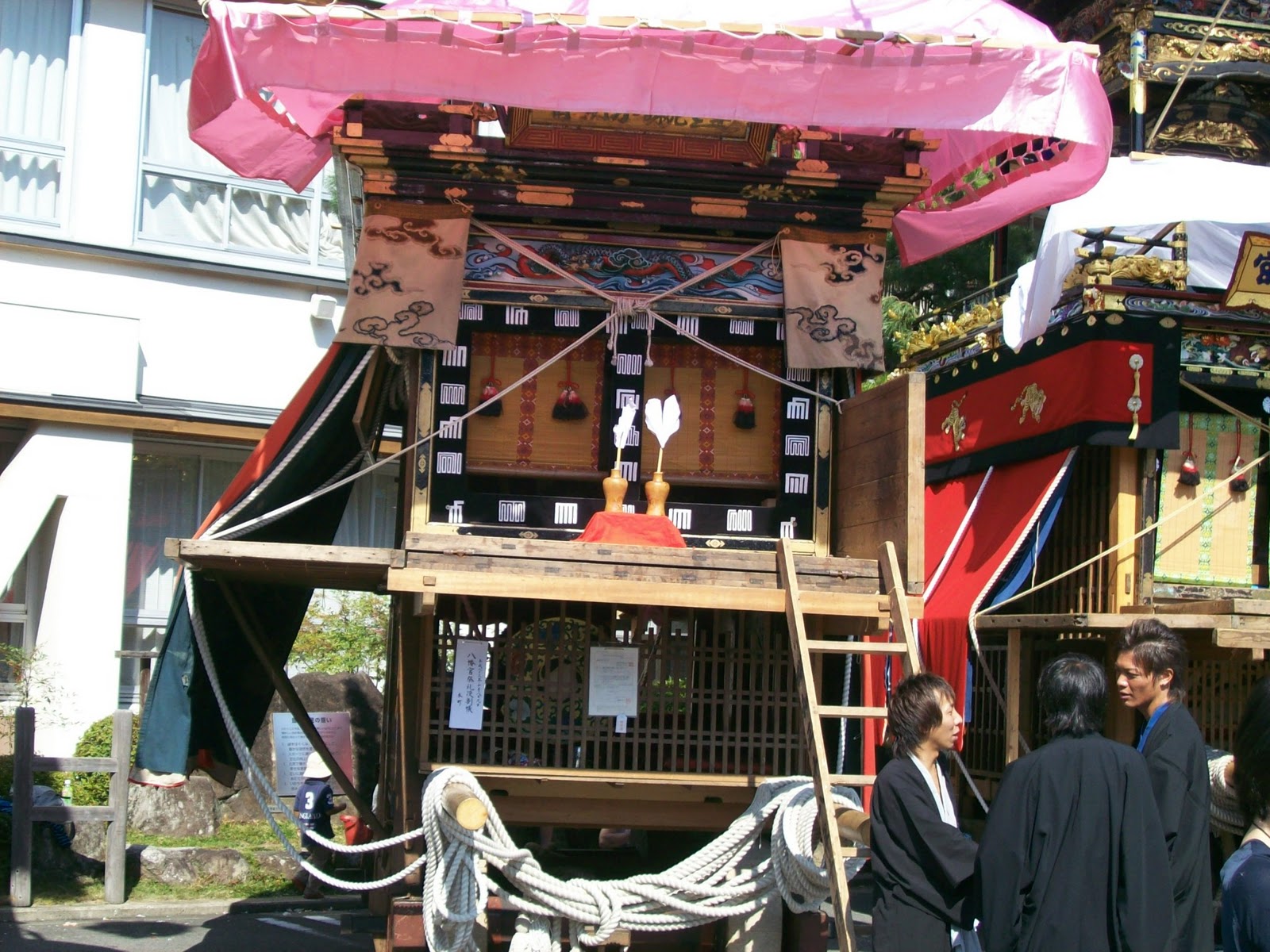
There are four dashi, these wheeled, tiered things.  These dashi come from 4 parts of Asuke: Shinmachi, Nishimachi, Honmachi, and Tamachi.  The dashi have three different levels.  Inside on one level there are people playing musical instruments: a drum, a flute, and I think something else.  The musical instruments are all the same, but the musicians from each village play a slightly different tune.


On the front of the dashi are the youngest men, who are all, apparently, around the age of their yakudoshi, or unlucky year, so around 25.  They dance on the front of the dashi and apparently are just filled with sake throughout the day.  Like, they get completely completely drunk.  I’m amazed they don’t fall off the dashi.


(In fact, I asked one of the guys if people ever fell off.  I didn’t understand everything he told me, but he said they definitely could fall off, that he was a safe guy, he never had fallen off, and that they try to make sure people don’t fall off, like holding onto them from inside the dashi and stuff.)

Anyway so this whole thing, this dashi, is pulled and pushed by a bunch of men, using ropes and the big wooden poles on the front of the dashi.


We got there a little before everything got started and were immediately approached by a guy from Honmachi saying that we were more than welcome to take pictures of their dashi and ask them questions and stuff.

After that the dashi were all pulled forward, one by one, so that they were directly in front of the Hachimangu, the shrine.  They each set up a little altar and played a song for the kami, the god, while a priest (kannushi) blessed the dashi.  From there the dashi moved onward and the festival started for the day.

 Here's a video of the dashi moving out and the dancing and music starting.

In addition to the dashi, there are other villages that are a part of Asuke that aren't part of the main four, so they don't have their own dashi.  These are villages that were incorporated into the Asuke area more recently, or something like that.
These villages have their own Teppotai, or, I guess, musket squad.  These men get together and before the festival for weeks in preparation they hang out, drink beer, and make these straw things to decorate their guns.  The guns are old ones, from around the Edo period.
The decorations vary some from group to group.  Some had pinwheels, some had some autumn leaves, these ones had rainbow tassels.
The teppotai parade throughout the festival, and then at certain areas they circle up and fire their muskets.


You can see the whole process here.  The sound was incredibly loud.  You can see where my camera jumps a little! 

We split off into groups, which means I wandered around with my friend Jessica.  Our first priority was snacking/lunch.  Takoyaki, yakitori (grilled chicken), crepes, chocolate covered bananas, ikayaki (grilled squid), yakisoba (fried noodles), okonomiyaki (like a pancake, with pork, cabbage, egg, and sauce), I love me some festival food.  I only had enough stomach space for takoyaki and a crepe, though. 

We walked back by where the dashi had been moved to, again set up with their little altars.

We skulked around and asked questions awkwardly, like "what are those bottles for?" and "Do people ever fall of the dashi?"  and awkwardly got our pictures taken by old Japanese people!
Apparently foreigners are noteworthy out here.  But one lady I managed to strike up conversation with after she took me and Jessica's pictures, so that was nice.

After a bit more wandering we ran into a woman who was actually from Tokyo, but had lived here.  Her son had since moved back and this year was his first year being able to be a part of the teppotai group.  She said it was her first time seeing the festival but she seemed really excited.  She whipped out her iPhone and showed us pictures of him and we said we'd probably seen him when we were watching earlier.  That woman was really nice.  It's always exciting when I find I can have conversations with people, even only partially!

After we talked to that woman we reconvened as a class, and since the sound of the teppotai's guns going off every few minutes was getting a little unbearable, we went for a hike!


There were tons of people out fishing, and climbing on the rocks.
We walked up to a Buddhist temple, where an incredibly nice Buddhist monk told us about the temple, who built it, what it was for, and about his beliefs.  He talked about the strong wood the temple is made out of, so that even in an earthquake it's fine, and about how tons of bugs come out in the summer, but they're living things too, so you can't harm them.  I don't know, he was a really nice guy, letting us into the temple even when he was busy working, selling good luck charms and talismans and things.
It was a very calming experience after the noise and excitement of the festival.


THE SCARIEST OF BRIDGES
It was a cable suspension bridge and MY PROFESSOR and my classmates insisted on SHAKING IT
OH GOD STOP IT NO AAAHHH

After that we went out to dinner and Hoan ate cow and pig internal organs without knowing it! Yay!
I had chirashi sushi, a bowl of sliced sashimi (raw fish) and other sushi topics scattered over rice.  It was yummy! And other people had delicious food, too.  Hoan liked his innards fine, even after he found out what they were, so I guess that's okay.

It got dark after that, and the next stage of the festival started, the kind of closing festivities I guess.
The Teppotai (all very drunk) got back together in their groups and said goodbye to the dashi and the festival for the year, before heading back to their own villages.
The dashi moved back by the shrine.  After that the most exciting part of the festival started.
The bonden, these paper pompom looking things suspended on bamboo poles from the front of the dashi play an important role here.
The white things are the bonden.
At the end of the festival, a guy from the top level of the dashi (who is completely wasted at this point) takes both of the bonden and throws them into the crowd.  Whoever catches it brings good luck to their family for the rest of the year.


I was too far back and not near aggressive enough to see what actually happened, but my classmates who were closer told me that things got pretty intense.
Apparently last year two guys were fighting over it and then they finally settled it with janken (jankenpon is Japanese rock paper scissors)!  Oh Japan!

Anyway after that the dashi had to be pulled back to each of their home villages, where they are disassembled and put away again for the next year.

We headed on home, where it was back to school as usual. But the trip itself was really fun!
I love this class and this professor yay!

Friday, September 2, 2011

We'll pretend it's still 9/1

9/1/11
I’m so tired!  Today has been a long day! Fun, but long. 
I’m lying on my futon right now and each time it’s much more comfortable than I expect it to be.  I keep drifting off, and it’s only nine o’clock.  Granted, I’ve been up since 6:30, but still!

First, I’m going to respond to comments:
Mom, I’ll try to make sure I keep the updates coming.  Regarding the fish, at first I kinda stabbed at it with my chopsticks because I wasn’t sure what to do with it, but then we were told we could eat it with our hands, and just to pull the finds off and bite in. So I just picked it up and bit into its stomach.  You don’t eat the head or the tail or the bones of that fish.  If it were a smaller fish you could.   It tasted pretty weird.  There wasn’t a lot of meat in it and the entire belly was full of eggs.  Kind-of disturbing, but when in Rome!

Shaun, I want to the onsen twice today.  Yessssssssssss.

This morning we were greeted by a lovely rainbow outside the window of the room where we were eating breakfast.  I really like Japanese breakfast.  Rice, miso soup, nori, egg, a bit of salad, pickles, some fish... There were also these little meatballs, some dumpling things, and grapefruit wedges.  Beats the heck out of cereal.

After that we had 3 more hours of Japanese class. ;A;
Iris and I and a couple other people from our class yesterday moved up to the more advanced Japanese class today.  It was challenging, but it was worth it.  I could still mostly follow what was going on, and it was an actual challenge so it didn’t feel like I was wasting my time.

After class we had a break for lunch.  Is there something about Thursdays in Japan? It seemed like most of the restaurants, and the souvenir shop, on the main drag outside our hotel were closed.  There were also a lot more Japanese tourists today.  Is September 1 a holiday I didn’t know about?
After walking over a couple blocks, several of us found a mom-and-pop-looking restaurant that served mostly curry dishes.  I got katsu curry rice, Shaun! Yummmm.

We met up at our ryokan and then met our tour guides for a tour of Inuyama and a couple of its museums. 

On the way we ran into some re-enactors.  I forgot who they all said they were, but relatives of Oda Nobunaga and Tokugawa Ieyasu (I think.  Those are the only famous Japanese historical figures I know the names of... I don’t even remember if they belong in the same era, so I might be totally wrong about this.  Shaun? Anyone?) The tour guides wanted to take a picture of us with them.  One of the girls on our program got someone to take one with her camera, too, so hopefully I’ll get to see it eventually.  I do have this picture of them by themselves that we were able to take later, though.

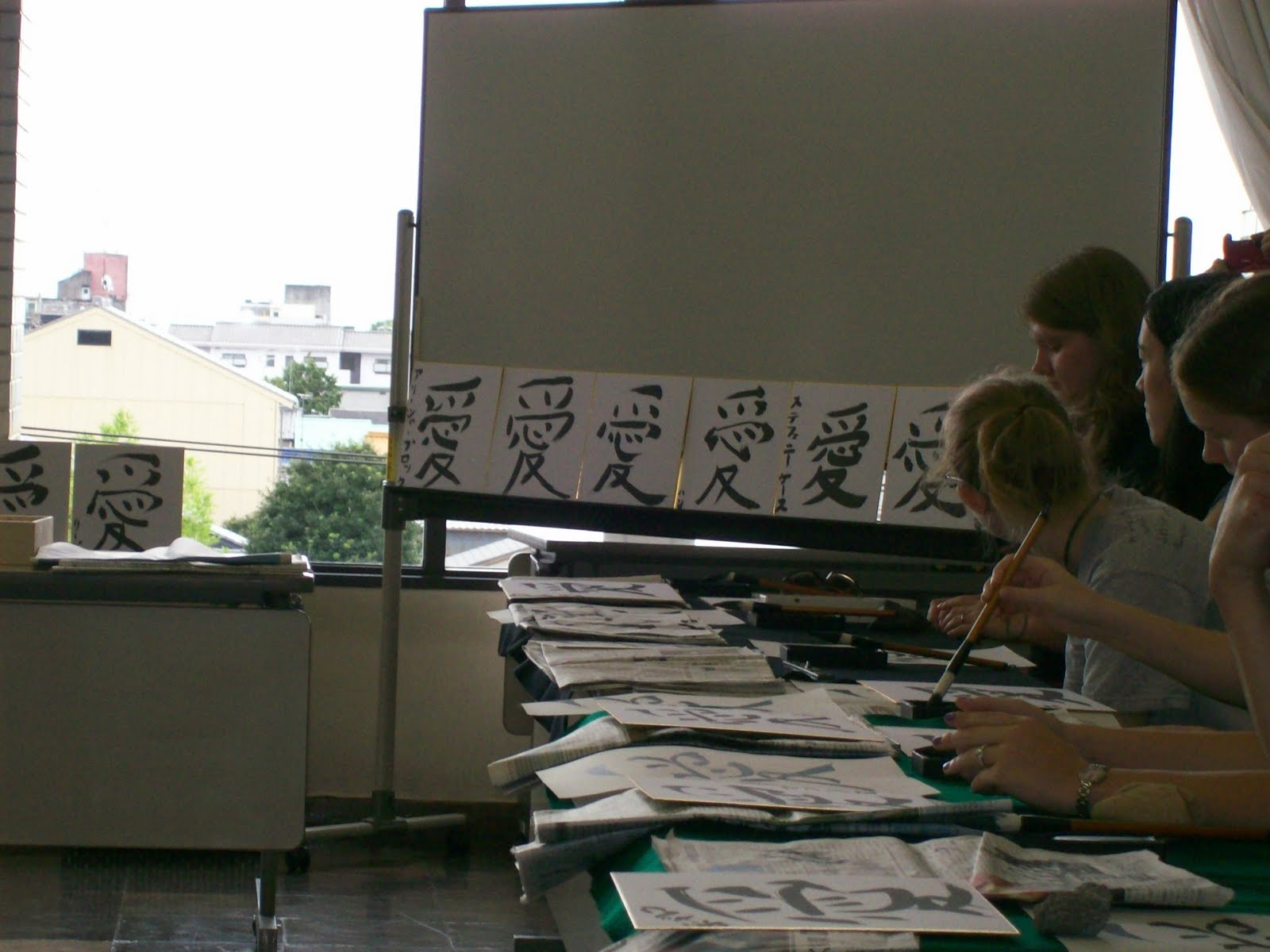
Our first stop was the town hall, where we went into a room and practiced 書道 (shodou), calligraphy.  Our teacher had been a calligraphy artist for sixty years.  She’d done calligraphy performances all over the world, in the US and the UK.  She was really fascinating.  I don’t think I ever understood why anyone would want to do calligraphy before today.   

She had us writing 愛 (ai), the character for love.  She explained that she chose “love” because it was a word we would always need.  The character could be used to express “to love someone” or “to be loved by someone” or “liking something” or “thinking something is cute”.   She challenged us to really put our feeling of 愛 into writing it, and that that was more important than the correctness of the strokes.  She demonstrate by writing big, on the white board, using her entire arm, a very stylized version of 愛。At one point, going around the room as we were practicing, she suggested we try writing it in a single breath.  I must have made a scared face because she and her interpreter and some of the volunteers started laughing and said “You can just try, you don’t have to do it!” 

She walked around and commented on people’s 愛, saying they needed to be stronger, or less tentative, things like that.  She corrected my posture, holding my arm out and moving my hand so that each stroke had a kind of “flick” at the end of it.  I felt like I was feeling the mojo more.  I still didn’t like the way mine looked, but one of the volunteers told me it looked good, that it looked about as good as a normal Japanese person’s attempt would look.  That made me appreciate our teacher’s sixty-some-odd years of 書道 experience more.  When we see calligraphy exported here to the US we really only see the masters’ work, you know?  It’s hard to appreciate what normal handwriting and stuff looks like.

After we used up all of our practice paper and did one we hopefully liked most on nice paper, we put them all up on the window sill and the board in front of the room.  Our teacher looked at them all and said they were very good for the short amount of time we’d had.  She said that, just like love, even though we were all writing the same character, none of them were the same.  She told us we should try to write 愛 again throughout our lives because while are love was young now, it would change shape and form in our 30s and our 40s. 
I know it sounds weird, but the whole experience was strangely beautiful. It was probably just because we were talking about love and I’m a huge sap. But it makes me reconsider taking 書道 at Nanzan.


(Readers, if there are any of you other than Shaun and my mom, does the Japanese I keep using bother you?  If it does, let me know.)

After the calligraphy we moved on to various museums within Inuyama.  We saw several things, like this float that would have been pulled and pushed by people.  It was three floors high and would have been wheeled around to festivals.  The bottom would have been full of musicians, and the top floor had several marionette-style puppets.  In the middle, hidden by a curtain, would have been the puppet operators.  Our guide explained that there weren’t any steering wheels, so when they wanted to turn the cart, people would have just had to push really hard on one side or the other.

After that we saw a demonstration of the puppets.  Basically four guys are standing under the curtain, pulling different strings and levers, and making the puppet do each of its motions.  This one was some alcohol sprite or something like that.  So he drinks sake, walks around, has a fan he can open and close, and his face turns red when he gets drunk. I took a video, but it doesn't seem to work and I'm too lazy to put it up on YouTube.

They let us give it a go, and it would have been hard to coordinate all those movements!


Another thing we saw in the museum that I thought was pretty cool was these tea-serving puppets.  They were wind-up toys where you could put a cup of tea on their little plate and they’d roll forward and offer it to the guest.  Keep in mind that this is from the Edo period. 


We stuck our heads in a place where the reenactors had been hanging out.  Inside there was a bunch of samurai armor.  They let us try on one paper kabuto hat. 
戦う顔!tatakau kao (fighting face!)

After that we went to Inuyama castle.  It’s apparently the oldest castle in Japan, and still has all of its original foundation and stuff.  It’s not a world heritage site yet, but our tour guide made it sound like they were working on it.   Outside there was a shrine, but we didn’t have time to really stop there and figure out shrine procedure. 


It’s hard to see from this picture, but the stairs are really steep.  It’s to keep attackers from making their way up into the castle. 


Also, as you can kind-of see in this model of the structure, there aren’t nails holding together the foundation.  Instead, everything’s notched together, like lincoln logs.  It gives it flexibility in earthquakes and other kinds of disasters.  Our tour guide pointed out that since it’s still standing, that’s probably a pretty good testament to how well it works.


From the top of the castle there was an amazing view.


Do you see the grey cloudy tall tours behind the small hill in the background?  That’s Nagoya.


Here’s our hotel!

For dinner, we boarded a boat and had dinner!


Then we watched cormorant fishing.  I’d never heard of it before.  When I first read about it in our orientation packet I just assumed that meant we’d watch wild birds swooping around and diving in the water for fish.  Turns out, people actually use the cormorant to fish.


I couldn’t understand the explanation because it was in Japanese, but it looks like the cormorants have ropes around their necks, and the ropes are tied to the prow of the fishing boat.  The cormorants dive in the water for fish, and then the fisherman pulls them up onto the boat, squeezes their necks, and they cough up the fish. 
It seems kind-of cruel to me, to be honest.  I think this is the part the guy was explaining away in Japanese, so I don’t know whether it actually hurts them or not.  I know they feed the birds pretty well after they use them to catch fish.  A woman at the tourist shop next to the river gave us all free copies of a manga about cormorant fishing.  Maybe when my Japanese is better I’ll be able to figure out what the deal is. It was kind of a weird experience, to be honest.

After that we got a nice view of Inuyama Castle at night.


With that I’ll leave you all for now.
おやすみ!oyasumi! (good night!)